Get the chance to win £100 alongside trusted feeding advice, helpful tips and the latest deals and competitions straight to your inbox.

At 7 weeks pregnant, it might not look like there’s much going on from the outside, but inside your womb, your baby is developing and growing quicker than you might think, with rapidly developing brain cells and tiny limb buds!
A lot is going on in your body, too, and you might start to experience some common pregnancy symptoms such as tiredness and morning sickness.
Let’s take a closer look at your baby’s development and some of those seven weeks pregnant symptoms, as well as our top tips for this stage of your pregnancy and essential information about alcohol and pregnancy.
Your baby’s development
From what your little one looks like to their brain and limb development, explore what’s happening during week 7 of your pregnancy journey.
How big is my baby, and what do they look like?
Right now, your baby is still classed as an embryo and won’t be called a foetus until around week 8 of your pregnancy1
At 7 weeks pregnant, your baby is about the size of a grape and around 10mm long. Since their brain is growing faster than the rest of their body, their forehead looks quite big2. As they develop through the rest of your first and second trimesters, they’ll start to look more in proportion, and more like a baby!3. In addition, your baby’s eyelids are beginning to form over their tiny eyes2.
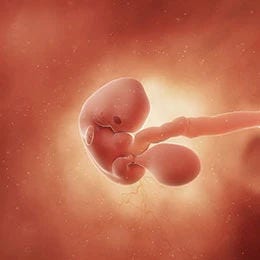
Baby brain - your baby’s rapidly developing brain cells
Your baby is developing as many as 100 brand-new brain cells every minute as their brain and spinal cord grow at an incredible rate2. To help the development of your baby’s brain and spine, make sure you’re taking folic acid for the first 12 weeks of pregnancy4.
Tiny arms and legs are starting to grow
At 7 weeks pregnant, your baby forms cartilage in their ‘limb buds’, which will soon grow into tiny arms and legs2. There are flattened ends at the ends of their arms that will become their hands.
Will I have a 7 weeks pregnant scan?
Most mums-to-be will be offered their first dating scan anywhere between 8 and 12 weeks of pregnancy5. Occasionally, you might have an early pregnancy scan before 10 weeks6. For example, if you’re experiencing any unusual bleeding or pain, or if you’ve had any complications in a pregnancy before7.
This early on in your pregnancy, your baby is best seen by an internal scan (known as a transvaginal scan) rather than one on your tummy, as this will provide a more detailed view of your pregnancy6,7.
Although a 7 week ultrasound isn’t routinely offered on the NHS or with the HSE, some mums choose to have an early pregnancy scan carried out privately. If this is something you decide on, you may not be able to see lots of detail, although you may be able to make out the yolk sac and your baby’s heart beating away.

Get the chance to win £100 alongside trusted feeding advice, helpful tips and the latest deals and competitions straight to your inbox.
By registering you're confirming you agree with our T&Cs and Privacy Policy. You can opt out anytime.
What changes are happening to my body at 7 weeks pregnant?
At 7 weeks pregnant, you’re unlikely to have a baby bump just yet. If this is your first baby, you’ll probably start to show at around 12 weeks - not long now!2.
During pregnancy, you’ll have as much as 50% more blood pumping around your body. This helps ensure your baby gets all the oxygen and nutrients it needs as it grows2.
All that extra blood volume can make you thirstier than usual, so remember to stay hydrated with plenty of fluids like water, decaf tea, sugar-free squash and milk2.
Common 7 weeks pregnant symptoms
With all the changes happening in your body, as well as those increasing pregnancy hormones, you may find yourself experiencing some common 7 weeks pregnant symptoms like2:
- Being or feeling sick (morning sickness)
- Tiredness and fatigue
- Feeling bloated or gassy. Try eating little and often, and avoid fatty and spicy foods
- A funny, metallic taste in your mouth
- Liking or disliking different foods than usual - those famous pregnancy cravings!
- Sore breasts. A supportive maternity bra can help.
- Headaches
- Light spotting (speak to your doctor if you’re bleeding at 7 weeks pregnant)
- White, milky vaginal discharge (talk to your doctor if you notice brown, green or yellow discharge at 7 weeks pregnant8)
- Thicker, shinier hair - hello, good hair days!
Alcohol and pregnancy
You should avoid drinking alcohol altogether during your pregnancy9. There is no safe level of alcohol when it comes to your baby’s growth and development as your pregnancy progresses.
How can alcohol harm my baby during pregnancy?
If you drink while pregnant, the alcohol in your blood can pass through your placenta to your baby. Their liver isn’t yet fully developed and is unable to process alcohol, which can lead to several risks, including low birth weight, premature birth and miscarriage9.
Drinking while pregnant can also cause fetal alcohol spectrum disorder (FASD), a serious lifelong condition that can affect your child’s learning, communication and physical development9.
What if I drank alcohol before I knew I was pregnant?
A lot of women who plan on getting pregnant stop drinking alcohol when they start trying to conceive. But if your pregnancy has been a surprise, you might have had a few drinks before you found out you were pregnant.
That’s okay – the risk of your baby being affected by that is low. Just avoid alcohol for the rest of your pregnancy, and if you feel worried or need any reassurance, speak to your doctor or midwife9.
Our tips for week 7 of pregnancy
Start your antenatal care
If you haven’t already, now’s the perfect time to book your first appointment as part of your antenatal (pregnancy) care.
At your first antenatal appointment (also called a booking appointment), your midwife will talk to you about what to expect during your pregnancy care, give you tips on staying healthy during pregnancy, and carry out some tests. You’ll also have a chance to ask any questions or talk about anything you might be worried about10.
Pregnancy vitamins and healthy eating
Your midwife will advise you to take 400 mcg of folic acid and 10 micrograms of vitamin D for the first 12 weeks of your pregnancy. In addition, try to eat a varied, balanced diet to ensure you and your baby get all the vitamins you need for a healthy pregnancy11.
Pregnancy vaccinations
When you’re pregnant, your immune system is weaker than usual to allow your baby to develop. That means you’re more likely to pick up illnesses and, if you do get ill, you’re more likely to feel worse and experience complications.
It’s important to get all the vaccinations you’re offered during pregnancy, to help keep you fighting fit. You can have the flu vaccine and the first COVID-19 vaccine at any time, and you’ll be offered others like the whooping cough and respiratory syncytial virus (RSV) vaccines later on in your pregnancy12.
Take care of yourself - emotional wellbeing
Having a baby is a big life change, and it can feel a little overwhelming. If you’re worried about anything at all, don’t be afraid to lean on those around you. It’s important not to keep things to yourself if you’re not feeling great emotionally, and your healthcare professional can provide you with lots of resources and support if you need it.
- NHS. You and your baby at 8 weeks pregnant [online 2021]. Available at https://www.nhs.uk/pregnancy/week-by-week/1-to-12/8-weeks/ [Accessed May 2025]
- NHS Best Start in Life. Week 7 [online] Available at https://www.nhs.uk/best-start-in-life/pregnancy/week-by-week-guide-to-pregnancy/1st-trimester/week-7/ [Accessed May 2025]
- NHS Best Start in Life. Week 24 [online] Available at https://www.nhs.uk/best-start-in-life/pregnancy/week-by-week-guide-to-pregnancy/2nd-trimester/week-24/ [Accessed May 2025]
- NHS. Pregnancy, breastfeeding and fertility while taking folic acid [online 2022]. Available at https://www.nhs.uk/medicines/folic-acid/pregnancy-breastfeeding-and-fertility-while-taking-folic-acid/#:~:text=Folic%20acid%20and%20pregnancy,It%20helps%20make%20blood%20cells. [Accessed May 2025]
- NHS Best Start in Life. 8 weeks pregnant [online]. Available at https://www.nhs.uk/best-start-in-life/pregnancy/week-by-week-guide-to-pregnancy/1st-trimester/week-8/ [Accessed May 2025]
- NHS (2023). Ultrasound scans in pregnancy [online]. Available at https://www.nhs.uk/pregnancy/your-pregnancy-care/ultrasound-scans/ [Accessed May 2025]
- NHS Buckinghamshire Healthcare (2022). Scanning in the early pregnancy unit [online]. Available at https://www.buckshealthcare.nhs.uk/pifs/scanning-in-the-early-pregnancy-unit/ [Accessed May 2025]
- NHS. Vaginal discharge in pregnancy [online 2024]. Available at https://www.nhs.uk/pregnancy/related-conditions/common-symptoms/vaginal-discharge/ [Accessed May 2025]
- NHS. Drinking alcohol while pregnant [online 2023]. Available at https://www.nhs.uk/pregnancy/keeping-well/drinking-alcohol-while-pregnant/ [Accessed May 2025]
- NHS. Your first midwife appointment [online 2022]. Available at https://www.nhs.uk/pregnancy/finding-out/your-first-midwife-appointment/ [Accessed May 2025]
- NHS Best Start in Life. Vitamins and supplements in pregnancy [online]. Available at https://www.nhs.uk/best-start-in-life/pregnancy/vitamins-and-supplements-in-pregnancy/. [Accessed May 2025]
- NHS. Vaccinations in pregnancy [online 2023]. Available at https://www.nhs.uk/pregnancy/keeping-well/vaccinations/ [Accessed May 2025]
More from pregnancy


Pregnancy topics



Need free advice with a smile? Get in touch with our dedicated Care team.
Ask us a question (8am-8pm Mon-Fri, 10-5pm Sat)
Messenger
Message us (8am-8pm Mon-Fri, 10-5pm Sat)
Call Us
Call us on 0800 977 8880 (8am-8pm Mon-Fri, 10-5pm Sat)
FAQs
Get answers to your most frequently asked questions