Get the chance to win £100 alongside trusted feeding advice, helpful tips and the latest deals and competitions straight to your inbox.

18 weeks pregnant is an exciting time for you and your baby. Your little one is starting to move or wriggle around now, and you might start to feel their movements inside your 18 weeks pregnant bump1. You’ll also have your mid-pregnancy ultrasound scan too, where you might be able to find out if you’re having a boy or a girl (if you want to, that is!)2.
Let’s see what else is happening for you and your baby at 18 weeks pregnant.
Reviewed by Sammy, a registered NHS midwife with a background in neonatal nursing, dedicated to providing compassionate, evidence based care to women and families throughout pregnancy, birth and the postnatal period.
What’s 18 weeks in months?
At 18 weeks pregnant, you’re between 4 and 5 months along in your pregnancy and around halfway to meeting your baby.
Your baby’s development at 18 weeks
How big is your baby?
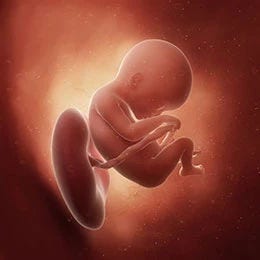
This week, your baby has grown to around 14cm from their head to their bottom, or about the size of a bell pepper1. They still look a little wrinkled at the minute, but they’ll start to fill out over the coming weeks as they put on weight3.
Your baby’s developing senses
Your baby’s senses and reflexes are developing quickly to help them get ready for life in the outside world. They’re practising swallowing and sucking and their hearing is getting better all the time, even hearing muffled sounds from outside the womb1,4. They might even be responding to loud noises, too (but don’t worry if you can’t feel it just yet)3.
Is it a boy or a girl?
Your baby’s ovaries or testes are fully developed by now and it might be possible to tell whether you’re having a girl or a boy at your next ultrasound scan if you want to find out before they arrive5,2.
Common pregnancy symptoms at 18 weeks
As your baby grows and develops, you might be experiencing some of these 18 weeks pregnant symptoms.
Feeling faint or dizzy
Hormonal changes during pregnancy can cause your blood pressure to drop, making you feel faint or dizzy. Try to take things steady and avoid standing up too quickly, especially if you do start to feel faint6.
Some other things you should try to avoid if you’re prone to feeling dizzy are6:
- Very hot showers or baths
- Skipping meals
- Lying on your back
- Standing for long periods
Back pain
Your growing, almost 5 months pregnant belly could be starting to put some added pressure on your lower back now, causing some aches and pain7.
It can help to sit or stand up straight and avoid arching your back too much. It’s also a good idea to wear comfy shoes and keep your weight distributed evenly over both your feet7.
Leg cramps
You might experience sharp pains or cramps in your legs or feet, especially at night. If you do get leg cramps, try these exercises and stretches to help ease the pain8:
- Bend and stretch your foot up and down
- Rotate your ankle one way and then the other
- Pull your toes upwards towards your ankle
- Rub the muscle hard
Swollen hands and feet
Some swelling in your hands and feet is normal during pregnancy, especially when you get further along. It’s usually caused by water retention and comes on gradually, especially towards the end of the day9.
Swelling can be uncomfortable, but it’s not usually harmful to you or your baby. You can try to reduce the swelling by9:
- Resting with your feet up when you can
- Wearing comfy shoes and socks (nothing too tight)
- Taking regular walks during the day
Varicose veins
Varicose veins are veins that have swollen or twisted. They might feel lumpy or bulge out under your skin10. They’re most common in your legs, but you might get them in other places, too8.
It’s common to get varicose veins during pregnancy. Try to8:
- Avoid standing for too long
- Avoid sitting with your legs crossed
- Sit or lie down with your legs raised
- Stay active with exercise like walking or swimming to help with your circulation
Varicose veins should get better on their own once your baby is born.
Your body at 18 weeks pregnant
Have a look at what else is happening for you and your baby at 18 weeks.
Feeling your baby’s first kicks
Most people feel their baby’s movements (sometimes called ‘quickening’) for the first time when they’re 16 to 24 weeks pregnant. If you’ve been pregnant before, you might feel them a little earlier, and if this is your first pregnancy, you might not feel them until after 20 weeks11.
An 18-week foetus is still tiny, so their movements will feel like a gentle fluttering or swirling at first11. As they get bigger, you’ll soon be able to feel each kick, turn, and even hiccup!
Your mid-pregnancy ultrasound
Your mid-pregnancy ultrasound (also called a 20-week scan or fetal anomaly scan) will usually happen around now – when you’re between 18 and 22 weeks pregnant2.
This scan can tell you2:
- How your baby’s developing
- Whether there are any signs of conditions such as spina bifida
- The position of your placenta
Some hospitals will also tell you the sex of your baby if you’d like to know (although it’s not always possible to tell if your baby’s feeling shy!). If you’d like to be surprised, make sure you let your sonographer know at the start of your appointment12.
Tips and things to think about at 18 weeks pregnant
Maternity leave
You don’t have to tell your employer that you’re pregnant yet (the latest you can leave it is 15 weeks before your due date)1. But if you do decide to let your work know now, it means you can get maternity rights like paid time off for your antenatal appointments and a risk assessment to make sure you and your baby are safe at work. You can also start planning your maternity leave.
Getting plenty of rest
You might have more energy in your second trimester than you did in your first trimester, but it’s still important to get plenty of rest to help you feel well and ease symptoms like backache and swollen feet13.
Finding time to rest can be easier said than done, especially if you have a busy job, older children to look after, or other responsibilities. Now’s a good time to lean on the people around you if you can, and accept help from friends, family and coworkers13.
Eating a healthy pregnancy diet
You don’t need to eat a special diet while you’re pregnant, but it’s a good idea to eat healthily to make sure you and your baby are getting all the nutrients you need. This mainly means eating a wide variety of foods, including plenty of fruit and veg14.
You might feel hungrier than usual, but you don’t need to ‘eat for 2’. You won’t need to eat extra calories until your third trimester, when it’s a good idea to eat an additional 200 or so calories per day (around 2 slices of wholemeal toast with margarine)15.
- NHS Start for Life. Week 18 [online] Available at https://www.nhs.uk/start-for-life/pregnancy/week-by-week-guide-to-pregnancy/2nd-trimester/week-18/ [Accessed August 2025]
- HSE (2023). Fetal anatomy scan [online] Available at https://www2.hse.ie/pregnancy-birth/scans-tests/ultrasound-scans/fetal-anatomy-scan/ [Accessed August 2025]
- HSE (2022). 17 to 20 weeks pregnant [online] Available at https://www2.hse.ie/pregnancy-birth/baby-development-pregnancy-stages/stages/17-20-weeks/ [Accessed August 2025]
- Public Health Scotland (2023). Attachment and bonding during pregnancy. [online] NHS inform. Available at: https://www.nhsinform.scot/ready-steady-baby/pregnancy/relationships-and-wellbeing-in-pregnancy/attachment-and-bonding-during-pregnancy/.
- NHS Start for Life. Week 13 [online] Available at https://www.nhs.uk/start-for-life/pregnancy/week-by-week-guide-to-pregnancy/2nd-trimester/week-13/ [Accessed August 2025]
- HSE (2023). Dizziness and fainting in pregnancy [online] Available at https://www2.hse.ie/conditions/dizziness-and-fainting-pregnancy/ [Accessed August 2025]
- HSE (2024). Back pain in pregnancy [online] Available at https://www2.hse.ie/conditions/back-pain/back-pain-in-pregnancy/ [Accessed August 2025]
- NHS (2024). Common health problems in pregnancy [online] Available at https://www.nhs.uk/pregnancy/related-conditions/common-symptoms/common-health-problems/ [Accessed August 2025]
- NHS (2024). Swollen ankles, feet and fingers in pregnancy [online] Available at https://www.nhs.uk/pregnancy/related-conditions/common-symptoms/swollen-ankles-feet-and-fingers/ [Accessed August 2025]
- NHS (2024). Varicose veins [online] Available at https://www.nhs.uk/conditions/varicose-veins/ [Accessed August 2025]
- NHS (2024). Your baby's movements [online] Available at https://www.nhs.uk/pregnancy/keeping-well/your-babys-movements/ [Accessed August 2025]
- NHS (2024). 20-week screening scan [online] Available at https://www.nhs.uk/pregnancy/your-pregnancy-care/20-week-scan/ [Accessed August 2025]
- NHS (2024). Tiredness and sleep problems in pregnancy [online] Available at https://www.nhs.uk/pregnancy/related-conditions/common-symptoms/tiredness/ [Accessed August 2025]
- NHS (2023). Have a healthy diet in pregnancy [online] Available at https://www.nhs.uk/pregnancy/keeping-well/have-a-healthy-diet/ [Accessed August 2025]
- NHS Start for Life. Healthy eating in pregnancy [online] Available at https://www.nhs.uk/start-for-life/pregnancy/healthy-eating-in-pregnancy/#should-i-eat-for-two-during-pregnancy [Accessed August 2025]
Reviewed by Nutricia Medical Team: July 2026
More from pregnancy


Pregnancy topics




Get the chance to win £100 alongside trusted feeding advice, helpful tips and the latest deals and competitions straight to your inbox.
By registering you're confirming you agree with our T&Cs and Privacy Policy. You can opt out anytime.
Need free advice with a smile? Get in touch with our dedicated Care team.
Ask us a question (8am-8pm Mon-Fri, 10-5pm Sat)
Messenger
Message us (8am-8pm Mon-Fri, 10-5pm Sat)
Call Us
Call us on 0800 977 8880 (8am-8pm Mon-Fri, 10-5pm Sat)
FAQs
Get answers to your most frequently asked questions