Get the chance to win £100 alongside trusted feeding advice, helpful tips and the latest deals and competitions straight to your inbox.

Welcome to your third trimester! You’re now two-thirds of the way through your pregnancy with just one trimester left to go.
It’s normal to feel a bit uncomfortable from 28 weeks pregnant onwards as your baby and the bump protecting them get bigger and heavier. But there are some things you can do to prevent and ease some of the discomfort.
Let’s have a closer look at what’s happening this week, including your baby’s development, spotting gestational diabetes, and the 28 weeks pregnant symptoms not to ignore.
Reviewed by Sammy, a registered NHS midwife with a background in neonatal nursing, dedicated to providing compassionate, evidence based care to women and families throughout pregnancy, birth and the postnatal period.
What’s 28 weeks pregnant in months?
You’re now in month 7 of your pregnancy! Your third and final trimester has just started, and you only have 2 months left to go until you meet your baby for the first time. How are those baby name lists looking?
Your baby’s development at 28 weeks
Your baby’s tiny heart has to work harder to pump blood around their body, so their heart rate is a lot faster than yours. At 28 weeks pregnant, their heart’s beating at about 110-160 beats per minute, which is down from the 170 beats per minute it was doing at around week 10. Your midwife might be able to hear your baby’s heartbeat through a special stethoscope1.

Experts advise that you do not buy a home doppler kit to try to listen to your baby’s heartbeat yourself, because they’re not a reliable way of checking that your baby is well2.
Instead, get to know your baby’s regular pattern of movements and call your maternity unit straight away if you notice any changes, no matter how small2.
How big is my baby, and what do they look like?
At 28 weeks pregnant, your baby is now just under 38cm long from their head to their heel – about the size of an aubergine1. They’re getting a little plumper now as they continue to put on weight, ready for life in the outside world3.
You and your body: changes at 28 weeks pregnant
As you head into your third trimester, your baby continues to grow, and you get closer to your due date, you might notice some changes happening in your body.
Braxton Hicks at 28 weeks pregnant
Towards the end of your pregnancy, it’s normal to feel what are called ‘practice’ or ‘Braxton Hicks’ contractions4. They’re just your body’s way of preparing for labour, but they can come as a bit of a shock, especially if this is your first pregnancy!
Braxton Hicks contractions are different from labour contractions in a few ways4:
- They don’t come regularly
- They don’t last long (usually less than a minute)
- They don’t get more intense or closer together as time goes on
If you’re still not sure if you’re having labour contractions or Braxton Hicks at 28 weeks pregnant, you can always call your maternity unit to be sure.
Your baby bump at 28 weeks pregnant
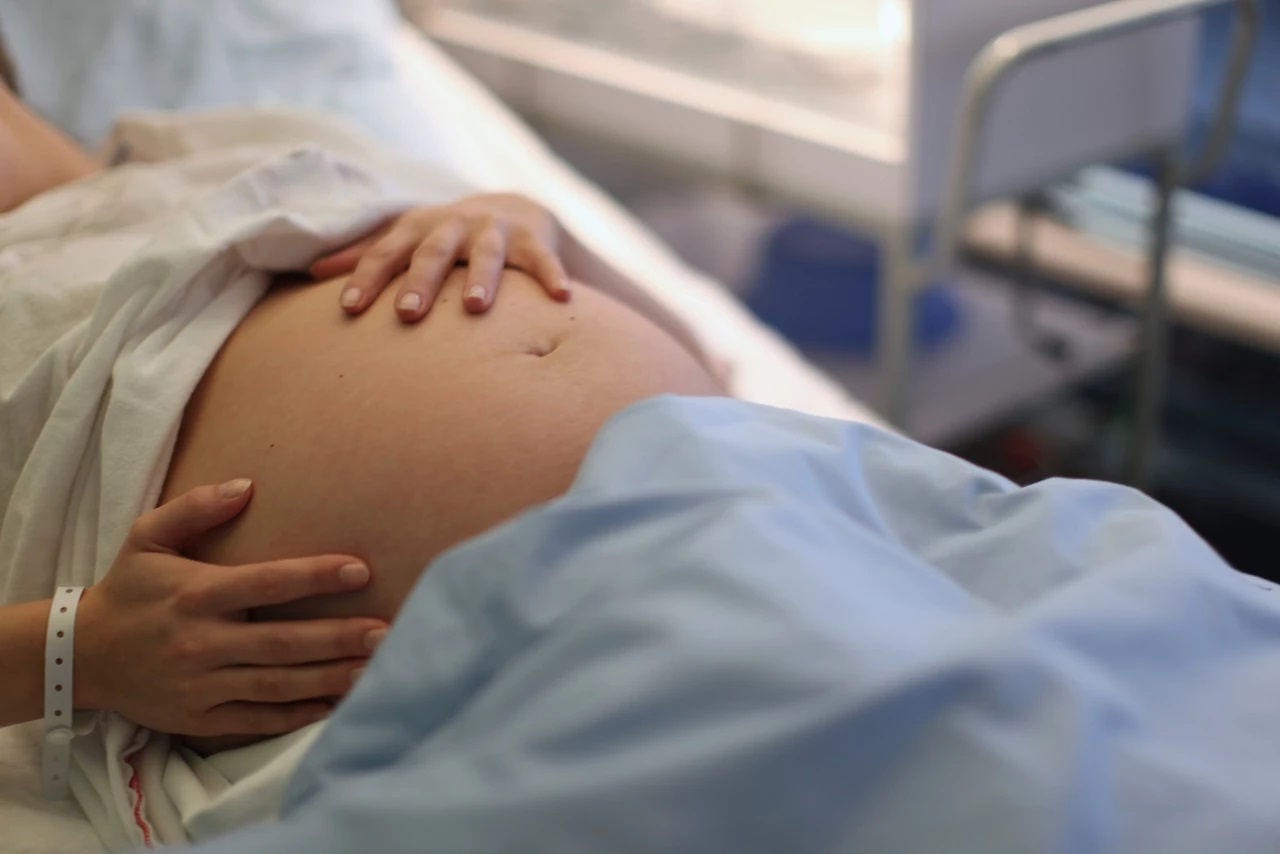
As your baby keeps growing into your third trimester, so does your bump! That means it could start to put more pressure on your body, so it’s important to avoid sleeping on your back now to reduce the risk of stillbirth5.
You can make sleeping with a baby bump more comfortable by5:
- Bending your knees
- Putting a pillow between your legs
- Using another pillow to support your bump
Around now, you might be noticing some side effects of carrying around your baby bump, like1:
- Indigestion as your baby presses against your stomach
- Back ache from the extra weight
- Swollen ankles and feet caused by water retention
- Stretch marks on your bump as well as your legs and breasts4
- Pains in the side of your bump as your ligaments stretch
Most of the symptoms that come with your baby bump at 28 weeks pregnant can be helped by getting plenty of rest1, so try to get your feet up and let other people give you a hand where you need it.
Common pregnancy symptoms at 28 weeks
As well as Braxton Hicks contractions and side effects of your baby bump at 28 weeks pregnant, here are some other symptoms you might notice this week.
Nosebleeds
You have more blood pumping round your body than usual during pregnancy which, combined with your hormones, can make the odd nosebleed fairly common when you’re expecting1.
If you do get a nosebleed, here’s what you can do1:
- Stay upright (don’t lie down)
- Lean forward
- Pinch the soft part of your nose above your nostrils
- Breathe through your mouth
- Stay in this position for 10 to 15 minutes or until the bleeding stops
Leg cramps
One symptom that can keep you up at night at 28 weeks pregnant is cramping in your calf muscles and feet.
If you get leg cramps, it can help to6:
- Rub the muscle that’s cramping
- Pull your toes up towards your ankle
- Vigorously move your foot up and down
- Rotate your foot one way and then the other 8 times
Painful gums
You might notice that your gums are more sensitive during pregnancy, and they might even get swollen or start bleeding.
It’s important to take good care of your pearly whites while pregnant by brushing twice a day (you can switch to a soft toothbrush if your gums feel sensitive) and cutting down on sugary snacks and drinks7.
You can access free dental check-ups during your pregnancy and for one year after you give birth using your maternity exemption certificate. Ask your midwife if you don’t think you were given one at the start of your pregnancy7.
Leaky breasts
As you get closer to your due date, your body’s making important preparations to help welcome your little one into the world. That includes starting to produce your first milk (called colostrum), which you might notice leaking from your nipples8.
This is completely normal and nothing to worry about. You can always try putting a tissue or breast pad in your bra to help absorb the colostrum if you like8.
Gestational diabetes at 28 weeks pregnant
Gestational diabetes is more common in the second and third trimesters. Learn more about what gestational diabetes is, what causes it, and how to reduce your risk.
What is gestational diabetes?
Gestational diabetes is high blood sugar that some mums-to-be experience during pregnancy. Most women who have gestational diabetes have otherwise normal pregnancies, but it can sometimes lead to9:
- Your baby growing bigger than expected, which can increase the risk of induced labour or caesarean.
- Increased risk of going into premature labour.
- Pre-eclampsia (high blood pressure during your pregnancy).
- Your baby developing jaundice.
Symptoms of gestational diabetes during pregnancy
You’ll be offered regular blood sugar tests throughout your pregnancy, which is how most cases of gestational diabetes are discovered9.
If your blood sugar levels get too high, you might experience some symptoms of gestational diabetes during pregnancy, like9:
- Feeling very thirsty
- A dry mouth
- Needing to pee more often
- Feeling very tired
- Blurred vision
- Thrush
Some of these symptoms are common during pregnancy, whether you have gestational diabetes or not. If you’re worried, it’s best to speak to your GP or midwife.
As well as your blood sugar levels, your midwife will measure your bump regularly from around 28 weeks pregnant. If your bump measures larger than expected for how far along you are, this may be another sign of gestational diabetes and you will likely be offered further tests10.
What causes gestational diabetes?
Anyone can develop gestational diabetes, but the risk is higher if9:
- You’ve had gestational diabetes in a previous pregnancy.
- You’ve had a baby who weighed 4.5kg or more when they were born.
- Any of your parents or siblings have diabetes.
- You’ve had any weight loss surgery.
- You’re of African-Caribbean, Asian, Black, or Middle Eastern origin.
- You’re older than 40.
- Your BMI (body mass index) is above 30.
How to avoid gestational diabete
While there’s no magic wand you can wave to make sure you definitely won’t develop gestational diabetes, there are some things you can do to reduce your risk.
These include11:
- Staying active. Moderate exercise during pregnancy, like walking, swimming, dancing and doing yoga can help balance your blood sugar.
- Eating well. Eating a healthy, balanced diet and cutting down on the fat and sugar in your diet can lower your risk of gestational diabetes and make sure you and your baby get all the nourishment you need.
- NHS Start for Life. Week 28 [online] Available at https://www.nhs.uk/start-for-life/pregnancy/week-by-week-guide-to-pregnancy/3rd-trimester/week-28/ [Accessed July 2025]
- NHS (2024). Your baby's movements [online] Available at https://www.nhs.uk/pregnancy/keeping-well/your-babys-movements/ [Accessed February 2026]
- HSE (2022). 25 to 28 weeks pregnant [online] Available at https://www2.hse.ie/pregnancy-birth/baby-development-pregnancy-stages/stages/25-28-weeks/ [Accessed July 2025]
- HSE (2022). What to expect in the third trimester [online] Available at https://www2.hse.ie/pregnancy-birth/baby-development-pregnancy-stages/stages/third-trimester/ [Accessed July 2025]
- HSE (2023). Why you should sleep on your side during pregnancy [online] Available at https://www2.hse.ie/pregnancy-birth/keeping-well/health-lifestyle/why-you-should-sleep-your-side/ [Accessed July 2025]
- NHS (2024). Common health problems in pregnancy [online] Available at https://www.nhs.uk/pregnancy/related-conditions/common-symptoms/common-health-problems/ [Accessed July 2025]
- NHS Start for Life. Week 13 [online] Available at https://www.nhs.uk/start-for-life/pregnancy/week-by-week-guide-to-pregnancy/2nd-trimester/week-13/ [Accessed July 2025]
- NHS (2024). Leaking from your nipples [online] Available at https://www.nhs.uk/pregnancy/related-conditions/common-symptoms/leaking-nipples/ [Accessed July 2025]
- NHS (2022). Gestational diabetes [online] Available at https://www.nhs.uk/conditions/gestational-diabetes/ [Accessed July 2025]
- NHS The Shrewsbury and Telford Hospital (2017). What happens if your baby is measuring large for dates? [online] Available at https://www.sath.nhs.uk/wp-content/uploads/2020/10/Large-baby.pdf [Accessed February 2026]
- HSE (2023). Gestational diabetes [online] Available at https://www2.hse.ie/conditions/gestational-diabetes/prevention/ [Accessed July 2025
Last reviewed: September 2026
Reviewed by Nutricia’s Medical and Scientific Affairs Team
More from pregnancy





Pregnancy topics



Get the chance to win £100 alongside trusted feeding advice, helpful tips and the latest deals and competitions straight to your inbox.
By registering you're confirming you agree with our T&Cs and Privacy Policy. You can opt out anytime.
Need free advice with a smile? Get in touch with our dedicated Care team.
Ask us a question (8am-8pm Mon-Fri, 10-5pm Sat)
Messenger
Message us (8am-8pm Mon-Fri, 10-5pm Sat)
Call Us
Call us on 0800 977 8880 (8am-8pm Mon-Fri, 10-5pm Sat)
FAQs
Get answers to your most frequently asked questions