Get the chance to win £100 alongside trusted feeding advice, helpful tips and the latest deals and competitions straight to your inbox.

What's in this article
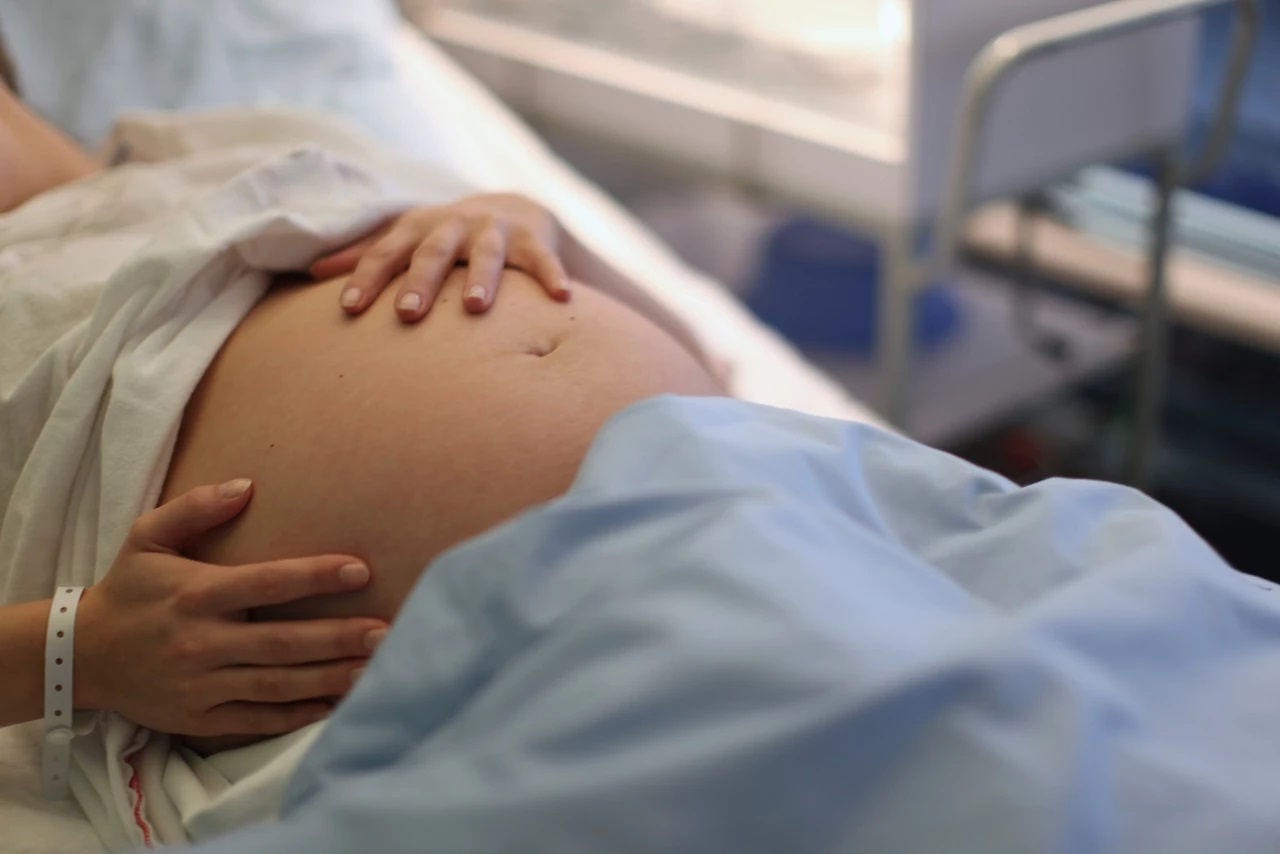
From the very moment you know you’ve got a baby on board, you’ve probably found yourself watching your pregnant belly, just waiting for your baby bump to arrive. So, when do you start showing in pregnancy?
No two baby bumps follow the same journey, and here we’ll take a look at what you might expect from your pregnancy bump week by week, month by month. We’ll also explore some of the things that can affect how and when your bump appears, how you can take care of yourself and your changing body, and answer some commonly asked questions.
When do you start showing in pregnancy?
There’s a lot going on during the first trimester of pregnancy, as your little one grows more rapidly than they will at any other point in your pregnancy1.
In the first 12 weeks, they’re already developing a nervous system, brain and other vital organs - they also have tiny hands and feet1. But all of this growth is taking place behind the scenes, and there’s every chance that you won’t look any different to the outside world2.
If this is your first pregnancy, you’re unlikely to have a visible baby bump until you’re at least 12 weeks pregnant, because at this point, your uterus is still tucked safely within your pelvis3. If you find that your clothes are a little tighter, this is probably down to changes in your digestive system (for example, bloating - a common early pregnancy symptom) rather than your pregnant belly4.
If you’ve been pregnant before, your baby bump might appear sooner, as the muscles in your stomach and uterus may have been stretched in your last pregnancy2.
In summary, everyone’s different, and there are a number of things that can affect the size of your baby bump and when you start showing in pregnancy. For example5:
- Whether you’ve been pregnant before.
- Hormonal changes.
- Your weight before you became pregnant.
- How strong your stomach muscles are.
- Whether you’re having more than one baby.
- Find more information on this below.
How your baby bump grows from week-to-week
As your baby grows in your womb, every week, month, and trimester can bring changes for your pregnant belly. For example, at 1 week pregnant, your belly size is unlikely to change at all. By the end of your first trimester, you might just start to notice your week 12 bump, whereas your pregnant stomach at 4 months might be getting a little harder to hide!
Use our handy table below to track what might be happening for you and your baby bump from week 1 to the day you meet your new arrival.
| Week | Month | Trimester | Your baby bump |
|---|---|---|---|
| 1 - 4 | Month 1 | First | Although amazing things are happening, your baby bump isn’t visible yet. |
| 5 - 8 | Month 2 | First | A pregnancy test might be on the cards around now, as some of the tell-tale signs of pregnancy kick in (hello morning sickness!). However, if this is your first baby, you’re unlikely to have a pregnant belly just yet. |
| 9 - 12 | Month 3 | First | It might not be obvious, but you may start to see signs of a week 12 bump1, but remember this varies from person to person. |
| 13 - 16 | Month 4 | Second | Your pregnant belly at 4 months is probably starting to show - just in time for some of your energy to return. |
| 16 - 20 | Month 4 - 5 | Second | Your pregnant belly continues to get bigger, and it might be time for looser clothing6. |
| 20 - 28 | Month 5 - 7 | Second | By now, your baby bump will be growing steadily. Every 2 - 3 weeks from around week 26 of your pregnancy, your midwife may measure your bump from the top of your uterus to the top of your pubic bone. This is known as the ‘fundal height’.7, 8. |
| 29 - 40 | Month 7 - 9 | Third | Your pregnant belly is still growing, as your baby has a final growth spurt and puts on fat ahead of coming into the world9. |

Get the chance to win £100 alongside trusted feeding advice, helpful tips and the latest deals and competitions straight to your inbox.
By registering you're confirming you agree with our T&Cs and Privacy Policy. You can opt out anytime.
What can affect when your baby bump shows?
Every pregnancy and every baby bump is different. Whilst some people have a visible bump fairly early on, others don’t show until later. Try not to compare your baby bump to anyone else's; all that matters is that your doctor or midwife is happy with your health and your baby’s growth.
Several things can affect when your pregnancy bump will start to show, let’s take a look.
Whether you’ve been pregnant before
Your stomach muscles are connected by something called the ‘linea alba’, which is a band of connective tissue. During pregnancy, this band and your stomach muscles stretch10, which can cause your baby bump to show sooner in a second or subsequent pregnancy2.
Carrying twins or multiples
There are some signs and symptoms of pregnancy that might make you think you’re carrying more than 1 baby - the size of your bump being one of them. If you’re having twins or multiple babies, you may find that your pregnant belly is bigger than you might expect for how many weeks pregnant you are11.
Body shape and height
As your baby grows, your uterus will move up out of your pelvis and into your abdomen. When it does, your baby bump will start to show. If you have a shorter torso, you might find yourself with a pregnant belly sooner rather than later, simply because there's a little less room for your uterus to grow upwards12, 13.
Looking after your changing body
As amazing as it is to watch your baby bump bloom, the changes happening to your body can feel a little overwhelming. It’s important to take care of yourself as your baby grows, and here are some top tips from us to help you do just that.
Skin and belly changes
For some people, a growing bump comes with a number of skin and belly changes, including:
- Itchy skin: A very common pregnancy symptom caused by your hormone levels changing and your skin stretching with your growing bump. It’s rarely anything to worry about and usually stops once you’ve given birth14. Loose clothing can help. As can having a nice cool shower.
- Stretch marks: These are pink, red, purple or brown lines that appear most commonly on your growing pregnant belly, breasts and thighs. They’re very common in pregnancy and usually fade and become less noticeable once your baby is born15. Lots of creams claim to minimise or get rid of stretch marks, but there’s no evidence that they work. However, there’s no harm in gently massaging your baby bump once a day with a gentle moisturiser to keep your skin soft and supple.
- Linea nigra: Some people get a dark line (called the ‘linea nigra’) down the middle of their baby bump. This will disappear a few months after your baby’s birth and is just normal skin pigmentation16.
- Belly button: Given that your baby and bump are getting bigger, your belly button might go through a few changes of its own. It might become flattened as your belly stretches, or you might notice that it sticks out more as your ‘innie’ becomes an ‘outie’!
When to start wearing maternity clothes
As your baby bump becomes more pronounced, you might want to consider investing in some maternity clothes as you head into your second trimester. However, it’s completely up to you how you dress and express yourself during your pregnancy. Whilst some people feel more comfortable in maternity clothes specifically designed for pregnant bellies and growing bumps, others prefer to go a different way and avoid the expense of a whole new wardrobe (see some top tips from some of our mums below).
There’s no right or wrong here, so just do what feels right for you.
Comfort and clothing
During your pregnancy, you’ll probably find that some clothes are comfier than others. Here are some things to try:
- Maternity bras: As soon as you start to feel your breasts getting bigger, it’s worth getting measured for a maternity bra. Choose one that supports your back as well as your breasts, and opt for comfortable, stretchy material. “I found that underwired bras were no longer an option - they were just so uncomfortable. I’d advise giving a non-underwired maternity bra a go, with a soft, supportive band across your back and under your breasts.” (Seb’s mum).
- Elasticated waistbands: As Isla’s mum says, “buttons soon became a thing of the past during pregnancy! Not only were they just too fiddly, trousers and jeans with elasticated waistbands just fit much better over my growing baby bump.”
- Material matters: Avoid stiff, uncomfortable materials that dig in or irritate your skin. Soft knits, cotton, and other breathable fabrics are ideal.
- Layers: It’s common to feel too warm and sweat more during pregnancy, especially as your bump gets bigger. Follow this handy tip from Sylvie’s mum: “I started layering my clothes. Vest tops under loose cotton shirts with an oversized blazer was a comfy wardrobe staple.”
- Comfortable shoes: Flat, comfortable shoes can help you keep your balance as your baby bump grows and are the best choice if you’re experiencing back pain or swelling in your feet.
Weight gain as your bump grows
Uncommon boy names with character
As a general rule of thumb, most of the weight you’ll gain during your pregnancy will happen after week 2017, and here’s how it might look as you progress through the trimesters18:
- First trimester: You’re unlikely to notice much weight gain, although towards the end, you may feel your waist getting thicker and your breasts getting bigger.
- Second trimester: You may start to gain weight steadily now as your baby gets bigger.
- Third trimester: Your baby is fattening up ready for birth, and your weight gain will most likely peak around about now.
Remember that weight gain is a natural part of pregnancy, and a sign that your body is changing to meet the needs of your growing baby17. Your midwife will keep an eye on your weight gain at your antenatal appointments, and eating a healthy, balanced diet, along with some gentle exercise, can help to you to maintain a healthy pregnancy weight.
Tracking your bump's growth
You’ll have a number of antenatal appointments throughout your pregnancy, during which your midwife will check the health of both you and your baby.
From around week 26 of your pregnancy, your midwife may start to measure fundal height. They’ll use a tape measure to measure your pregnant belly from the top of your uterus to the top of your pubic bone. These measurements will then be recorded on a growth chart that’s unique to you and your baby7.
You’ll also be offered routine ultrasound scans approximately between weeks 11 and 14 and weeks 18 and 20 of your pregnancy19, 20. If there are any concerns with the fundal height, or any other risk factors in your pregnancy, you may be offered additional growth scans to keep an eye on how things are progressing21. Your midwife will provide all the information you need if this is something you need.
Chatting to your midwife about your baby bump
Lots of people have questions about their baby bump during pregnancy. Is it too big? Is it too small? Should I have started showing by now?
The bottom line? Pregnant bellies and baby bumps come in all shapes and sizes, and they don’t all show up at the same time. If you have any concerns at all about how your baby and bump are progressing, your midwife is a great person to talk to and is there to help.
Frequently asked questions
Can bloating be mistaken for a baby bump before your first scan?
Bloating is a common pregnancy symptom, especially during the first trimester. So, if you notice that your pregnant belly is a little bigger during the first few weeks of pregnancy, this is more likely to be the result of bloating than a baby bump.
If you’re having twins, when do you start showing?
There’s no way to tell when your pregnancy bump will show with twins, or with any baby. However, if you’re expecting twins, your baby bump might be bigger than you’d expect for how far along in your pregnancy you are.
Does bump size say anything about how big your baby is?
Whilst the size of your baby will be a factor, it’s not a definite indicator of how big your bump will be. Every baby bump is different, and there are lots of things that can affect how it looks, including your height and how your baby is positioned in the womb.
Can your bump appear to change size day-to-day?
Many women notice that their bump changes in size from day-to-day, with some even finding that it’s bigger in the evening than in the morning. As for what’s behind this, it could be anything from bloating and food digestion to the strength of your abdominal muscles. If you're worried about your baby’s growth, or you notice any sudden and very noticeable changes to your bump, always contact your midwife for advice.
Is it possible to look pregnant before a positive pregnancy test?
That all depends on when you decide to take the test. In the very early stages, you might not even know you’re pregnant until you miss a period, and it’s unlikely to be a visible baby bump that confirms your suspicions.
Can clothing or posture make a bump look more or less noticeable?
If you’re looking to keep your pregnancy under wraps a little while longer, certain clothes and how you wear them can help. Think billowy shirts tucked into trousers at the front, and bold, bright patterns that do a great job of distracting people away from your pregnant belly.
Dungarees and jumpsuits that are loose around the tummy can help too - although they might not be so great for those additional trips to the loo!
It’s also a good idea to pay attention to your posture. Avoid slouching, which can push your tummy forward; instead, keep your posture upright and pull your shoulders back.
Why might I have a noticeable bump earlier than 12 weeks?
Bloating, excess gas, and slower digestion can all contribute to you feeling and looking like you have a noticeable baby bump before week 12 of your pregnancy.
Is it common to not have a very visible bump by 14 weeks?
Baby bumps vary in size and shape from person to person. Many people won’t start to notice a bump until the second trimester, so don’t worry if yours isn’t visible by 14 weeks22. As long as your healthcare team is happy with how your pregnancy is progressing, there’s nothing to worry about.
- NHS inform (2026). How your baby develops week to week. The first 8 weeks [online]. Available at https://www.nhsinform.scot/ready-steady-baby/pregnancy/your-baby-s-development/how-your-baby-develops-week-to-week/. [Accessed September 2026]
- NHS Best Start in Life. Week-by-week guide to pregnancy. Week 4 [online]. Available at https://www.nhs.uk/best-start-in-life/pregnancy/week-by-week-guide-to-pregnancy/1st-trimester/week-4/#look-like. [Accessed September 2026]
- Tong C, Wang Y, Liu Z, Zhao Y, Xu Y, Wang W. Spontaneous reduction of an incarcerated gravid uterus after myomectomy in the second trimester: A case report. Medicine (Baltimore). 2019 Mar;98(9):e14731. doi: 10.1097/MD.0000000000014731. PMID: 30817624; PMCID: PMC6831445.
- NHS Best Start in Life. Week-by-week guide to pregnancy. Week 10 [online]. Available at https://www.nhs.uk/best-start-in-life/pregnancy/week-by-week-guide-to-pregnancy/1st-trimester/week-10/?utm_source=chatgpt.com#whats-happening. [Accessed September 2026]
- NHS Best Start in Life. Week-by-week guide to pregnancy. Week 12 [online]. Available at https://www.nhs.uk/best-start-in-life/pregnancy/week-by-week-guide-to-pregnancy/1st-trimester/week-12/#whats-happening. [Accessed September 2026]
- NHS (2019). The Pregnancy Book [online]. PDF available at https://www.esht.nhs.uk/wp-content/uploads/2019/10/The-Pregnancy-Book.pdf?utm_source=chatgpt.com. [Accessed September 2026]
- NHS Milton Keynes University Hospital (2025). Antenatal checks [online]. Available at https://www.mkuh.nhs.uk/maternity-services/your-pregnancy-journey/antenatal-checks. [Accessed September 2026]
- HSE (2023). Antenatal and maternity care appointments [online]. Available at https://www2.hse.ie/pregnancy-birth/pregnancy-care/care-appointments/. [Accessed September 2026]
- NHS Best Start in Life. Week-by-week guide to pregnancy. Week 31 [online]. Available at https://www.nhs.uk/best-start-in-life/pregnancy/week-by-week-guide-to-pregnancy/3rd-trimester/week-31/#whats-happening. [Accessed September 2026]
- NHS Bristol, North Somerset and South Gloucestershire Integrated Care Board. Your stomach muscles after birth [online]. Available at https://myjointhealthhub.bnssg.nhs.uk/pelvic-health-physiotherapy-service/pregnancy-and-after-childbirth/your-stomach-muscles-after-birth/?utm_source=chatgpt.com. [Accessed September 2026]
- Tommy's (2024). Am I having twins? [Online]. Available at https://www.tommys.org/pregnancy-information/im-pregnant/ask-a-midwife/am-i-having-twins#signsmorethan1. [Accessed September 2026]
- Faustin D, Gutierrez L, Gintautas J, Calame RJ. Clinical assessment of gestational age: a comparison of two methods. J Natl Med Assoc. 1991 May;83(5):425-9. PMID: 1875423; PMCID: PMC2627084.
- NHS Best Start in Life. Week-by-week guide to pregnancy. Week 17 [online]. Available at https://www.nhs.uk/best-start-in-life/pregnancy/week-by-week-guide-to-pregnancy/2nd-trimester/week-17/. [Accessed September 2026]
- NHS (2026), Itching in pregnancy [online]. Available at https://www.nhs.uk/pregnancy/complications/itching-and-intrahepatic-cholestasis/. [Accessed September 2026]
- NHS (2022). Stretch marks in pregnancy [online]. Available at https://www.nhs.uk/pregnancy/common-symptoms/stretch-marks/. [Accessed Se[tember 2026]
- NHS Best Start in Life. Week-by-week guide to pregnancy. Week 18 [online]. Available at https://www.nhs.uk/best-start-in-life/pregnancy/week-by-week-guide-to-pregnancy/2nd-trimester/week-18/. [Accessed September 2026]
- NHS Tayside. Weight in Pregnancy - optiMUM [online]. Available at https://www.nhstayside.scot.nhs.uk/OurServicesA-Z/MaternityServices/PROD_244561/index.htm. [Accessed September 2026]
- London Pregnancy Clinic. Pregnancy Weight Gain Calculator [online]. Available at https://www.londonpregnancy.com/pregnancy-weight-gain-calculator/. [Accessed September 2026]
- NHS (2023). Ultrasound scans in pregnancy [online]. Available at https://www.nhs.uk/pregnancy/your-pregnancy-care/ultrasound-scans/. [Accessed September 2026]
- HSE (2023). Ultrasound scans [online]. Available at https://www2.hse.ie/pregnancy-birth/scans-tests/ultrasound-scans/ultrasound-scans/. Accessed September 2026]
- NHS Gateshead Health (2025). Growth Scan in Pregnancy [online]. Available at https://www.gatesheadhealth.nhs.uk/resources/growth-scan-in-pregnancy/. [Accessed September 2026]
- NHS Best Start in Life. Week-by-week guide to pregnancy. Week 24 [online]. Available at https://www.nhs.uk/best-start-in-life/pregnancy/week-by-week-guide-to-pregnancy/2nd-trimester/week-24/?utm_source=chatgpt.com. [Accessed September 2026]
Last reviewed: September 2026
Reviewed by Nutricia’s Medical and Scientific Affairs Team

More from pregnancy


Pregnancy topics




Need free advice with a smile? Get in touch with our dedicated Care team.
Ask us a question (8am-8pm Mon-Fri, 10-5pm Sat)
Messenger
Message us (8am-8pm Mon-Fri, 10-5pm Sat)
Call Us
Call us on 0800 977 8880 (8am-8pm Mon-Fri, 10-5pm Sat)
FAQs
Get answers to your most frequently asked questions